



I tried Smart Watch App: Wearable Sync in the kind of situation where a wearable app either proves its value quickly or becomes another icon on the phone: a shared household with more than one person interested in keeping a smartwatch connected. Its purpose is straightforward, and the store summary captures the central idea: it helps sync a wearable with a smartwatch app. I found it most useful as a practical connection tool rather than as a complete health, fitness, or communication platform.
That distinction matters. When several people in a home use different devices, the difficult part is often not checking the time or reading a notification. It is getting the phone and wearable to recognize each other reliably, then understanding which person is actually using which setup. This app can be a convenient starting point for that process, but it does not remove the need for clear household boundaries. Each user still needs to pay attention to the phone, wearable, and account arrangement involved.
How Smart Watch App: Wearable Sync fits into a shared home
My first impression was that this is a focused Tools app for people who want a simpler route into wearable syncing. It is free to install, rated for Everyone, and available for devices running Android 8.0 or later. That makes it approachable for a broad range of phones, especially in a household where not everyone has the newest handset.
The app comes from Mission to improve your app and has built a sizeable user base, with over one million installs and an average rating of 4.1 from around 3,400 ratings. Those figures suggest that many people find the basic idea useful, while also leaving room for the usual differences in phone models, wearable brands, and setup expectations. A sync utility can feel excellent on one device combination and less smooth on another, so I would treat the rating as a helpful signal rather than a guarantee.
In a shared-use scenario, the most sensible arrangement is one phone and one wearable at a time during setup. I would not begin by trying to connect every device in the house simultaneously. Instead, I would identify the owner of the watch, keep that person’s phone nearby, and complete the connection before moving on to another household member. This simple order prevents a common source of confusion: not knowing whether a connection problem belongs to the app, the phone, or the wrong wearable.
There is also a useful everyday case for couples or parents and older children who use wearables at different times. One person may need the app only to establish a connection, while another may use it more frequently to keep a device available. The app can support that kind of coordination, but I would avoid treating one shared phone as a substitute for separate personal setups. A shared device can blur notifications, pairing choices, and responsibility for reconnecting a watch.
Start with a deliberate pairing routine
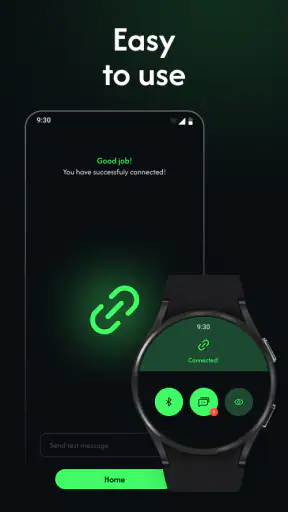
My practical advice is to prepare the hardware before opening the app. Charge the wearable enough for setup, keep the phone’s wireless connections available, and place the devices close together. These are ordinary steps, but they reduce misleading failures. If the watch is nearly empty, already attached to another phone, or out of range, an app designed to help with syncing cannot make the underlying situation disappear.
Once the devices are ready, give the process a few quiet minutes. Avoid switching between several phones while the first connection is still being established. If the household has multiple similar watches, label them physically or keep each one beside its owner’s phone. That is a small organizational trick, yet it is one of the most valuable ways to prevent accidental pairing with the wrong device.
The best result comes from treating syncing as an ownership task, not just a button press. Decide who owns the wearable, which phone is the primary companion, and who will handle troubleshooting later. Smart Watch App: Wearable Sync is more useful when those decisions are made first.
Where household boundaries become important
A shared phone creates a boundary problem that no connection utility can solve by itself. If two people take turns using the same handset, the person holding the phone may see wearable prompts or connection changes intended for someone else. That can be inconvenient, and it can also make people assume that the watch is connected to the wrong account or device.
I would therefore keep each person’s setup as separate as the household allows. Use one owner’s phone for that owner’s wearable, finish the session, and avoid repeatedly removing and re-adding devices just to let another person try the app. Constant switching may save a little hardware in the short term, but it creates more maintenance and makes it harder to remember the correct pairing state.
This is especially relevant when a family shares a tablet or spare phone. A spare device can be useful for testing whether a connection issue belongs to the main phone, but it should not automatically become a permanent shared control center. If several people depend on the same screen, coordination becomes part of the setup: announce who is pairing, keep the other watches away during discovery, and return the device to its owner when finished.
That approach also answers an important practical question: can one app serve several people? It may be possible to use the same app in a household, but the experience depends on how the phones and wearables are arranged. I would not promise a seamless multi-person dashboard. The safer expectation is one clearly defined pairing relationship at a time, with each user responsible for confirming that the correct wearable is connected.
What the app is good at, and what it is not
The strength of this app is its narrow purpose. If your immediate problem is getting a wearable recognized and synchronized with a smartwatch app, a dedicated tool can feel less distracting than a large companion platform filled with unrelated sections. I prefer that focus when I am setting up a device for someone who does not want to learn a complicated ecosystem.
At the same time, I would not choose it as my only reason to buy a wearable. The store summary emphasizes syncing, and that is how I approached it. People looking for detailed exercise analysis, a broad health dashboard, extensive watch-face customization, or a complete messaging experience should compare it with the official companion app for their specific wearable. A general sync tool may be easier to approach, but a manufacturer’s app can be the better choice when deep device-specific controls matter.
This is the main trade-off. Smart Watch App: Wearable Sync may reduce the first barrier between a phone and a watch, but a focused connection experience is not automatically a full replacement for every official tool. I would use it when connection is the priority and look elsewhere when the wearable’s advanced features are the priority.
Handling age, trust, and personal devices
The Everyone content rating makes the app suitable in age terms for a broad audience, but that does not mean every household setup should be identical. A younger user may need help identifying the correct watch or understanding why a connection belongs to a particular phone. An older relative may appreciate a less intimidating starting point, yet still benefit from someone writing down which phone should be used for future reconnection.
I would explain the arrangement plainly: this is the phone used for this watch, this is the person who checks connection problems, and this is what to do before borrowing another device. That conversation is more valuable than silently changing settings. It protects trust because people know which notifications or pairing prompts may appear on a shared screen.
Privacy expectations also deserve a calm explanation. A wearable can be personal even when the connection process is technical. I would not hand a child or relative a shared phone and assume they understand what a pairing request means. I would show them how to recognize their own device and ask before accepting a connection involving someone else’s watch. The app can be part of a responsible setup, but it does not replace household rules or personal consent.
For families, the most useful workflow is often a short supervised setup followed by independent use. Let the owner confirm the wearable, complete the connection, and test whether the watch behaves as expected. Then leave them with a simple reminder of which phone to use. This avoids turning every small reconnection into a group troubleshooting session.
Small workflow improvements that make a difference
One non-obvious tip is to keep a written record of the pairing arrangement when several watches look alike. I would note the owner and the phone, not technical jargon. If someone later reports that the watch is missing, that note immediately tells you which setup to inspect first.
A second useful habit is to separate setup from everyday charging. Do not use the moment when everyone is rushing out of the house to troubleshoot a wearable. Pairing is easier when the owner can stay nearby and confirm the correct device. Once the connection works, charging and normal use become much less confusing.
A third insight is to treat a failed sync as a sequence rather than a verdict. Check whether the intended phone is nearby, whether another phone may already be involved, and whether the correct wearable is being selected. Then retry one change at a time. In a household, changing the phone, watch, and settings all at once makes it impossible to learn what actually fixed the problem.
A fourth trade-off concerns the free installation and optional purchases. The app is free to install, while in-app purchases range from $16.99 to $51.99 per item. I would not spend money immediately just because the first connection feels inconvenient. First establish that the intended phone and wearable can work together and that the app fits the household’s routine. Paid options should be judged after that practical test, not before it.
Version, support expectations, and daily reliability
The current version is 58.0, and the app was released on April 24, 2024. For me, those details make it worth checking compatibility before asking an older family phone to become the main setup device. Android 8.0 is the stated minimum, but meeting a minimum operating-system requirement does not guarantee that every phone and wearable combination will feel equally smooth.
I would also keep expectations realistic about reliability. A sync app sits between two pieces of hardware, and either side can introduce friction. A watch may disconnect after a phone change, a household member may accidentally select the wrong device, or a previously used pairing may complicate a fresh setup. Those are not reasons to dismiss the app, but they are reasons to keep the process organized.
If the app works well for your combination, its value is easy to understand: it gives you a dedicated place to manage the connection instead of forcing you to guess which part of the phone’s settings is responsible. If it does not, the official app made by the wearable manufacturer may be the better fallback, particularly when the issue involves device-specific functions rather than basic recognition.
Who should use it and who should skip it
I would recommend Smart Watch App: Wearable Sync to someone who wants a straightforward tool for connecting a wearable and does not need a large collection of advanced features in the same screen. It is also a reasonable option for a household member who is uncomfortable with complicated setup menus and wants a focused starting point.
I would be more cautious if your home has many wearables, several shared phones, or frequent switching between owners. The app may still help, but the organizational burden remains. In that situation, separate phones or official companion apps tied clearly to each person may create fewer mistakes.
I would also look elsewhere if your main goal is detailed training analysis, extensive health records, or complete control over a particular manufacturer’s hardware. A focused syncing tool is not necessarily the strongest choice for those jobs. Its appeal is greatest when the connection itself is the problem to solve.
For a child or older relative, I would use it with a clear introduction rather than simply installing it and walking away. Show the person which watch is theirs, which phone belongs with it, and who to ask when the connection changes. The Everyone rating helps with broad accessibility, but good household practice still matters more than an age label.
My household verdict
After using Smart Watch App: Wearable Sync as a practical connection tool, I see it as a useful, focused option rather than an all-purpose wearable command center. Its free entry point, broad Android compatibility, and simple purpose make it easy to consider, especially when the immediate need is to get a smartwatch and phone working together.
My recommendation is strongest for one owner with one clearly assigned phone. In a shared home, it can still fit well, but only when everyone respects the pairing boundaries. Keep devices identified, avoid simultaneous setup, and let the wearable’s owner confirm each connection. Those habits do more to improve the experience than repeatedly tapping through menus.
The app’s 4.1 average from roughly 3,400 ratings reflects a generally positive reception without suggesting that every combination will be effortless. I think that is a fair way to view it. It can remove some of the uncertainty around syncing, but it cannot compensate for incompatible hardware, unclear ownership, or a desire for features beyond connection.
For my household, the final decision would be simple: I would install it when syncing is the specific problem, test it with the intended phone and wearable, and keep the setup personal rather than treating it as a shared hub. If that focused job is all you need, Smart Watch App: Wearable Sync is worth trying. If you want a complete wearable ecosystem with deep controls for one brand, I would choose the official companion alternative instead.


